Emerging key trends in hematologic malignancies
There is a peculiar irony to how cancer drug development works. Imagine decisions shaping billion dollar pipelines a decade from now tend to be made in the least glamorous corners of the world’s biggest conferences.

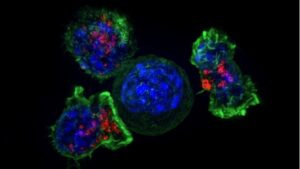
Cancer cells Source: Dr. Cecil Fox, NCI
While the late-breaking and phase 3 trial readouts tend to command centre stage, the early signals worth paying attention to.
These include biology hunches, proof-of-concept datasets, even creative ideas too nascent for an oral slot, which often appear quietly on laminated boards in vast, cold hangars.
If you want to understand where hematology/oncology is heading then this is a good place to start to learn about five emerging trends in the field we’ve identified…
To continue reading our latest highlights on oncology new product development including commentary and analysis BSB subscribers can log-in or you can click to access the content.
This content is restricted to subscribers






 Immunotherapy treatment for multiple myeloma has been around for several decades, first in the form of stem cell transplantation, then augmented by the addition of IMiD immune modulation drugs such as thalidomide, lenalidomide or pomalidomide. In due course, along came immune checkpoint blockade in solid tumours and it was only a matter of time before they would be evaluated in hematologic malignancies, albeit with mixed results.